
At first glance it looks like I got distracted by GIFs. Looking back, I think I was trying to make the tool legible.
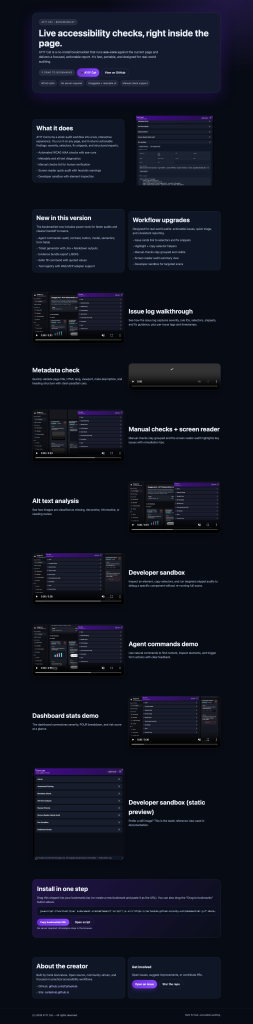
February 16 is one of the strangest-looking days in the repo if you only care about “core engineering.” There are loads of commits around GIFs, WebM demos, README walkthroughs, landing-page layout, hero copy, bookmark drag labels, demo ordering, and technical diagrams.
If you read that day cynically, it looks like too much polish too early. And maybe part of it was. But I do not think that is the whole story.
This project already had a fairly wide surface by then: scans, metadata, alt text, screen-reader review, sandbox, agent commands, ticketing, exports. That is a lot to explain in a static README if people have not seen the panel. Demos were doing real product work here. They were showing that the tool existed as an interaction model, not just a code bundle.
The commit messages say as much. There are explicit walkthrough commits for metadata, alt text, screen reader, the sandbox, the agent, and the dashboard. There is a technical diagram added to the README. The landing page gets reorganised multiple times. The install walkthrough gets moved to the top. Screenshots are replaced with GIFs. Hero copy gets tightened. The repo is trying to answer a simple problem: if someone lands here, do they understand what this thing does without running it first?
I actually think that is one of the more honest kinds of “marketing” work a developer can do. It is not claiming more features than the tool has. It is trying to show the actual flows. And because the features were already piling up fast, the explanation burden was real.
There is also a second thing happening here: the public repo was standing in for a larger private project at the start. The earliest README literally says this is the public bookmarklet-only package so the main project can stay private. In that context, the demos and landing page matter even more. If the public repo is the visible face of the work, it has to carry more explanation than a normal internal codebase would.
That said, I can also see a familiar early-stage tendency in this phase. When the product surface is still shifting, visual explanation can become a moving target. You can see that in the repeated copy and asset changes across the same day. It feels like I was still working out which story matched the actual tool best.
Later, the docs become much more controlled, factual, and boundary-driven. But here, the project still has some of that excited “show the thing from every angle” energy. I do not read that as empty polish. I read it as a developer realising that once a tool gets slightly complex, explanation becomes part of the build.
Visual evidence
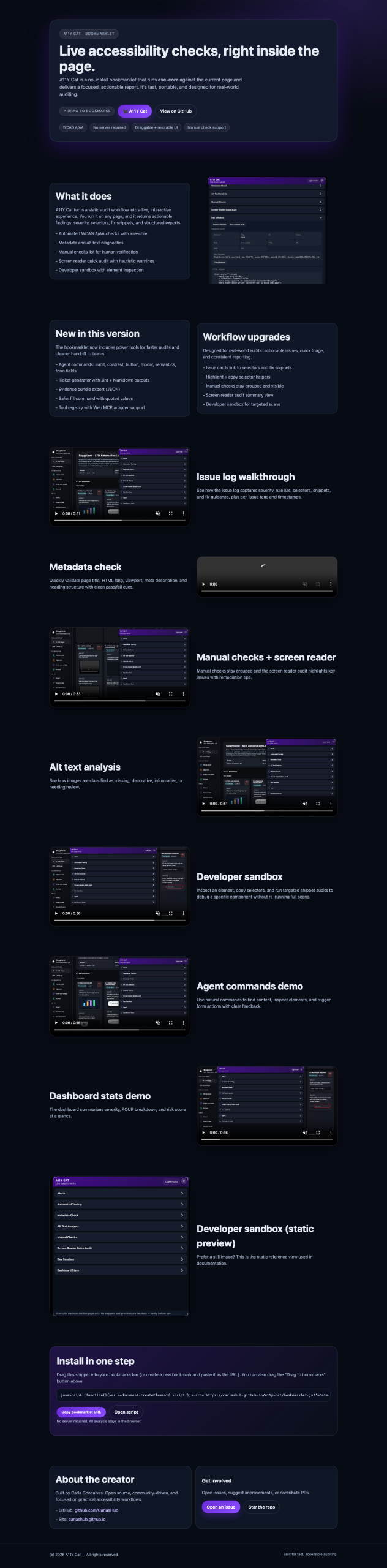
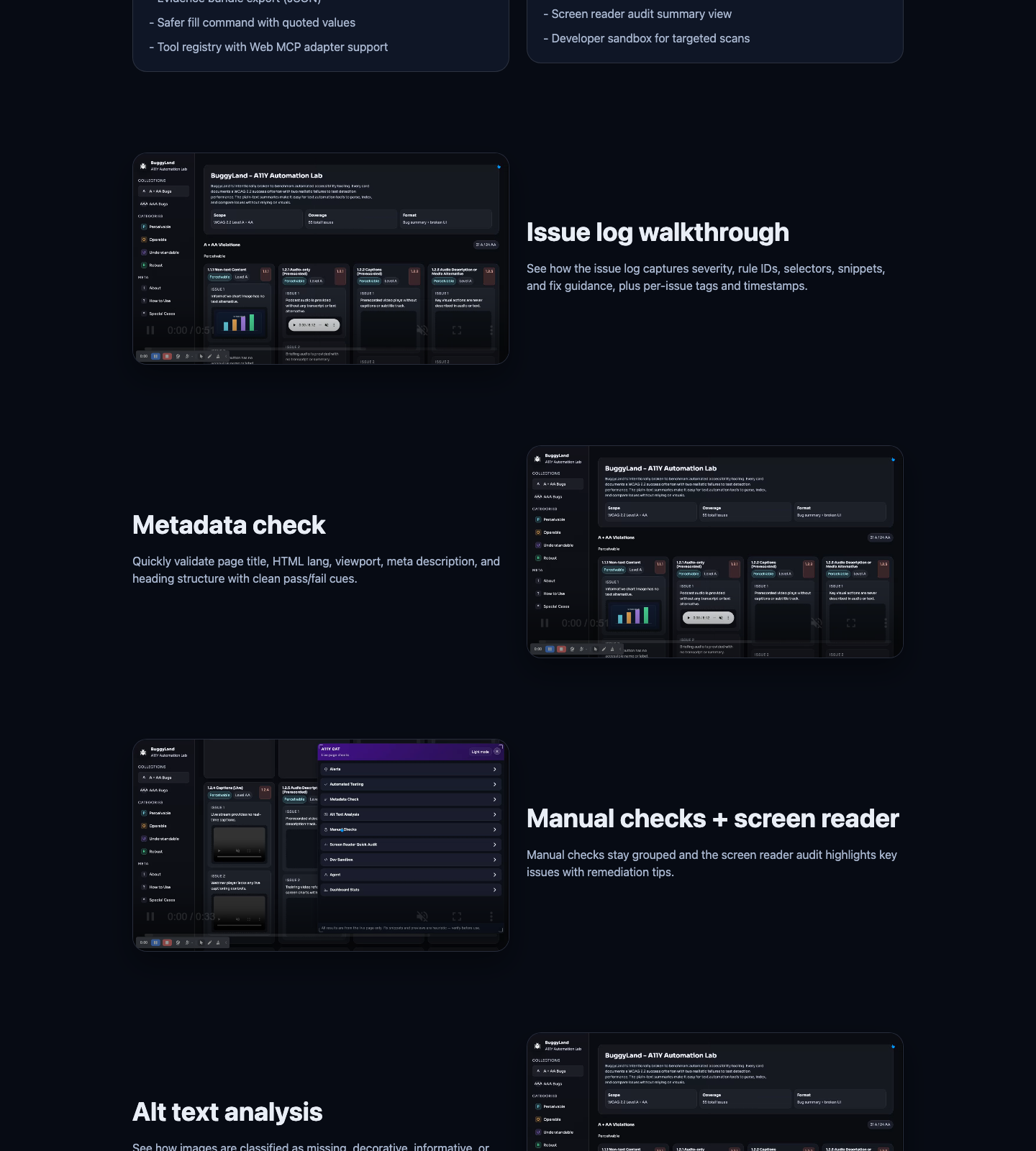
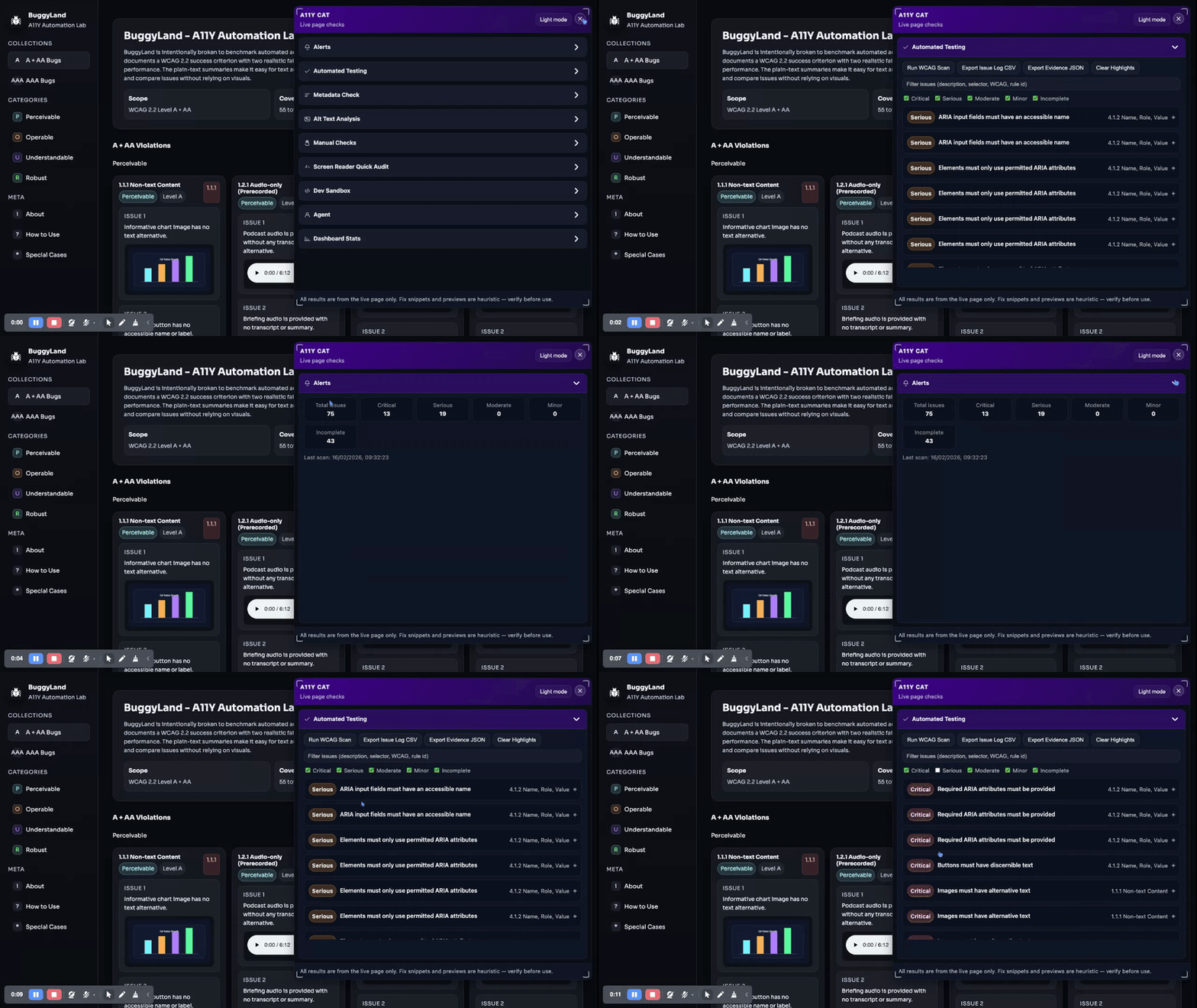
This phase now has direct captures from a runnable historical version of the public site, plus the walkthrough media already committed in the repo:
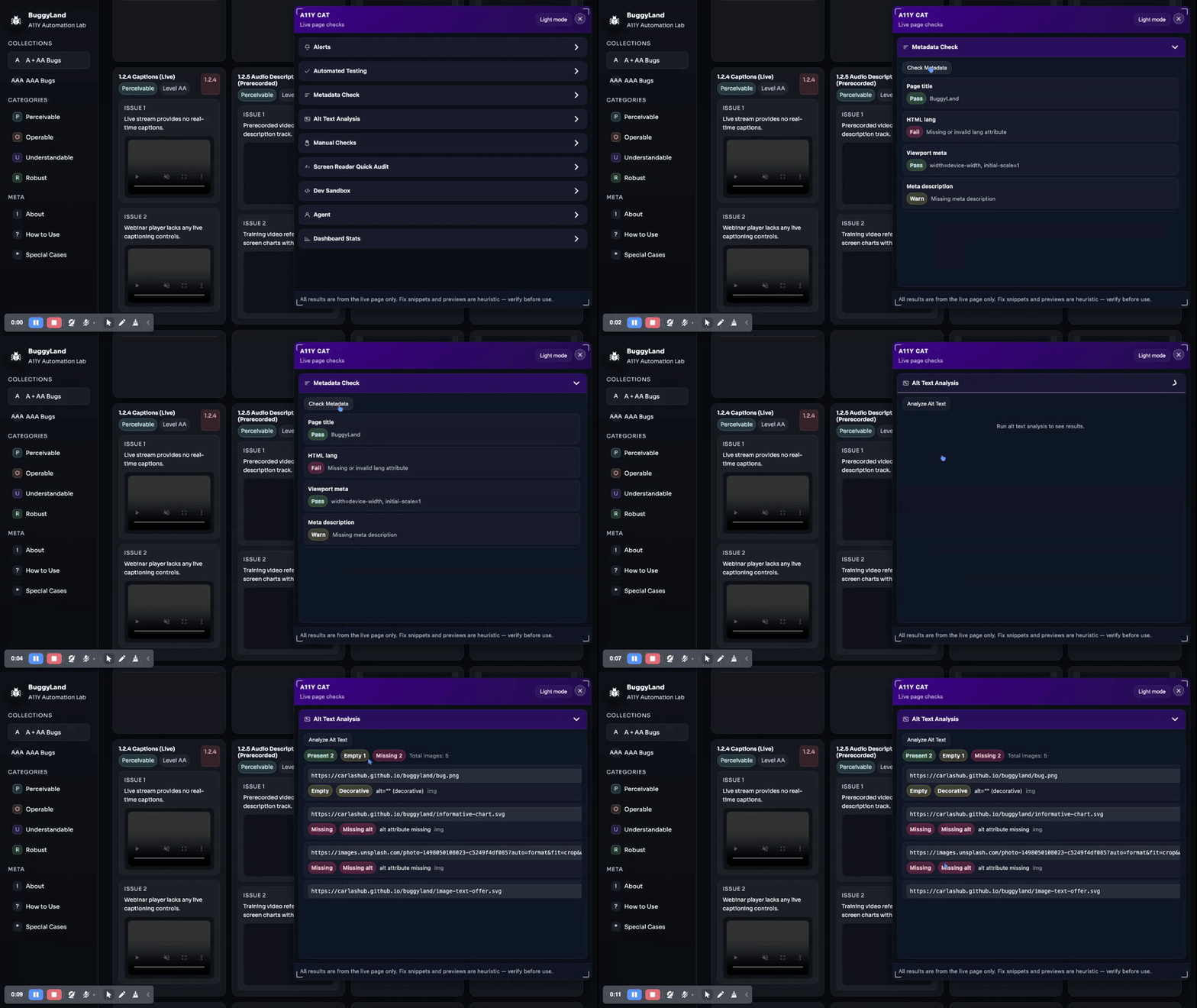
What I was really learning here
I was learning that if a tool has a lot of small workflows, people do not automatically understand it just because the code exists. Showing the real UI and the real flow was part of making the work understandable.
Evidence
- Commits:
608f7f5– WebM demos for metadata, alt text, and screen reader76b88e6– developer sandbox and agent demo videos42912e5– dashboard demo and docs clarificationb042db5– video walkthrough docs and technical diagram78f1000– screenshots replaced with GIF walkthroughs- multiple February 16 landing-page copy/layout commits
- Files:
../../README.md../../index.html../../download/
- Visuals:
phase-02-reconstructed-bookmarklet-expanded/landing-page.pngandphase-02-reconstructed-bookmarklet-expanded/walkthrough-section.png– direct historical screenshots captured from a checked-out worktree at3e6060bphase-02-bookmarklet-workflows/a11ydemo1.gifandphase-02-bookmarklet-workflows/BuggyLandMeta.gif– existing repo walkthrough assets from the February 16 demo-heavy phase
- Inference:
- The idea that these commits were partly compensating for a wider private/public split comes from the original README note that this repo was the public bookmarklet package while the larger project stayed private.