The command surface ended up becoming one of the most practical parts of the project. Instead of one fuzzy assistant prompt box with no real boundaries, the tool has commands that map to actual tasks: audit, contrast, button, modal, semantics, form fields, fill, find, submit, and ticket.
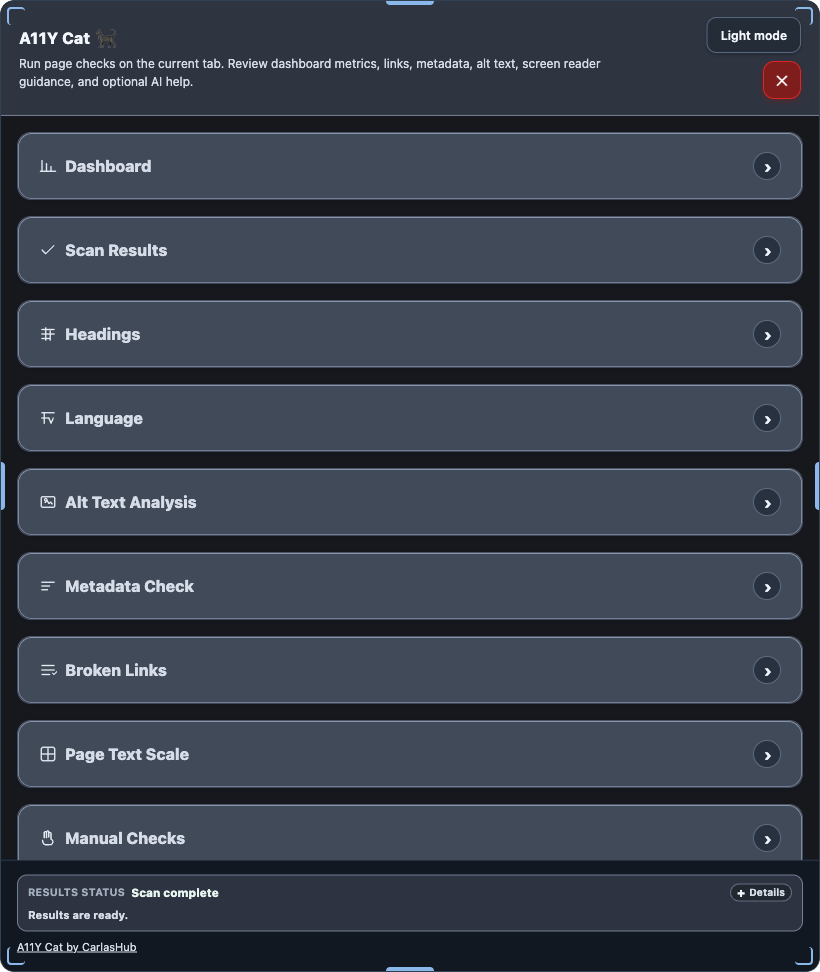
That is useful because real testers do not work in slogans. They work in actions. Show me the modal behaviour. Check this button. Find this text. Tell me what is happening with these fields. Draft something I can hand over. The more grounded the command is, the easier it is to test and trust.
The documentation goes further than just listing commands. It describes the result envelope, evidence bundles, source attribution, intentionally unsupported commands, diagnostics, and maintenance expectations. That tells me the command system is not decorative. It is part of the product contract.
Frankly, I trust a bounded tool far more than an overconfident one. Boundaries are where quality starts.
Documentation trail
COMMAND_REFERENCE.mdLOCAL_ASSISTANT.mdTESTING.md